
Tuesday, October 21, 2025
Experimenting with broadcasts

It started when Migue was organizing Hack The Chat (WhatsApp hackathon, sponsored by Volt). He needed to send announcements to hundreds of people he was talking with - coordinators, participants, sponsors - and the manual process was driving him crazy.
As CEO, he constantly dealt with similar mass communication needs in WhatsApp: investor updates, user announcements, team coordination.
During an Instagram story, he decided to show off how he was blasting through these announcements using what he called his "machine-gun" for automated messaging. These weren't sophisticated tools, just clever workarounds he'd figured out on top of Volt, to reach all the different user lists.
As he demonstrated this rapid-fire messaging system on his screen, direct messages began flooding in.
"How do I get those automations?"
"Can we use this in our workflow?"
"When are you releasing this for everyone?"
It was a sudden realization: Migue's internal communication solution had accidentally revealed something our users desperately wanted.
The Focus Problem
Here's the thing: we are laser-focused on achieving product-market fit and defining our ideal customer profile. Our north star is to save people time on WhatsApp, making professionals more productive. Everything else got thrown into the "let's check it out later, this isn't our focus right now" pile.
We originally had discarded this idea, as we thought some users could try to spam WhatsApp contacts massively, which is not aligned with our product vision. But our own usage had showed us that there are 'healthy' use cases for this kind of automations (like telling each contact on my Users list about an important update on the product).
And that pile kept growing. Users would suggest genuinely useful features, workflows that made total sense, automations that could help them. But they didn't directly serve our core mission through the features on our roadmap, so they went straight to the backlog graveyard where good ideas go to die.
But Migue's story reminded us something crucial: users don't want to hear about features on roadmaps. They want to see tools working, solving real problems, right now. All those requests we'd been dismissing? Users kept asking because they actually needed them.
That's when we realized we didn't have to choose between focus and exploration. AI experimentation became our secret weapon. We could stay focused on our core PMF while instantly prototyping all those "later" ideas with almost zero development time.
Users got to test their requests (many times disguised as Easter eggs!). We got to see if they actually used them, and our core product development never skipped a beat.
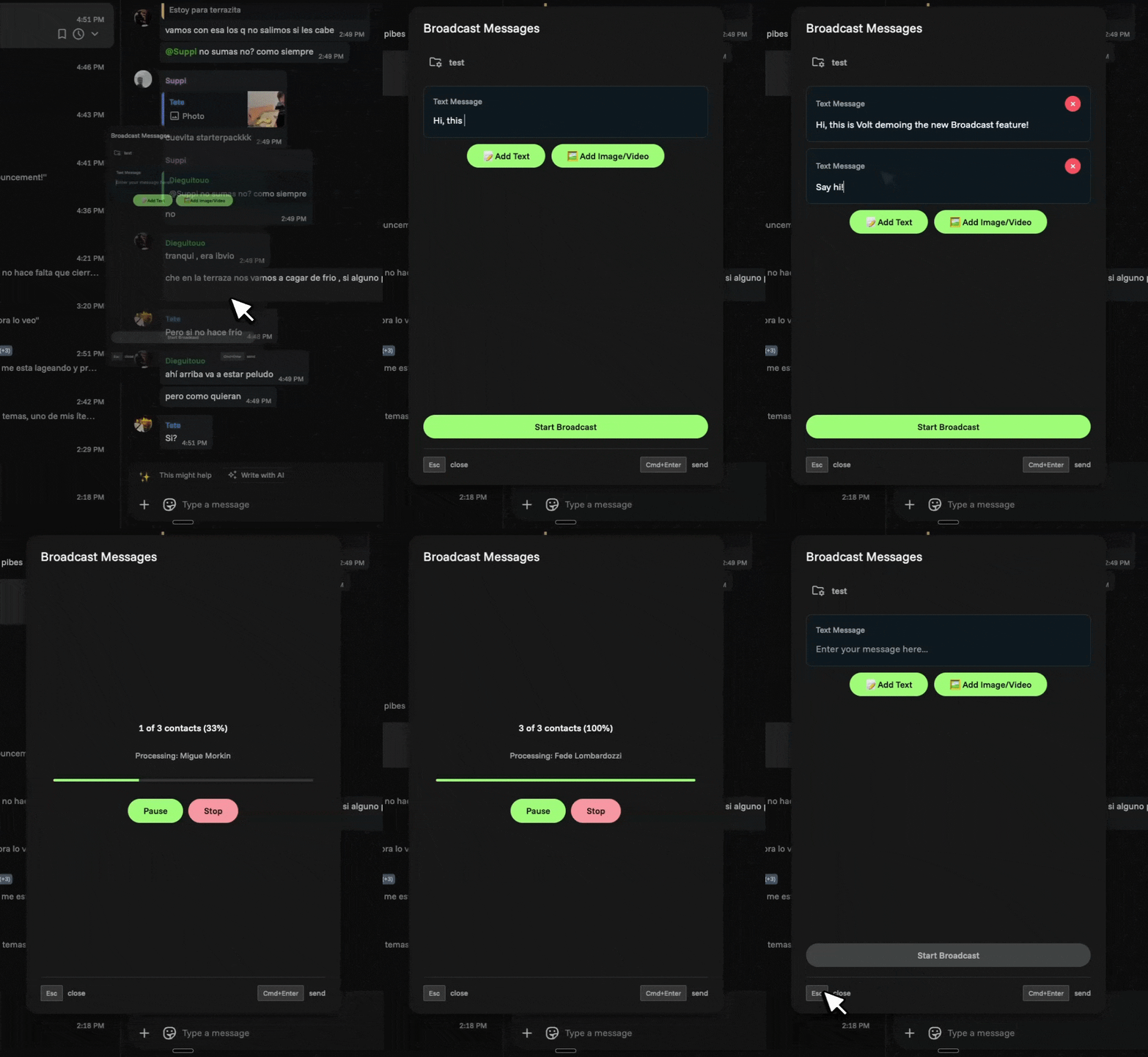
broadcast MVP in action
The Realization
Here's what hit us: all those user requests we'd been dismissing because they didn't fit our original POV? The fact that users kept asking for them repeatedly should have been our first clue that they might actually connect to our north star in ways we hadn't considered (we realized we could save our users hours of work just with this!).
We could prototype them instantly, track how people actually used them, and discover the unexpected connections back to saving time on WhatsApp.
So we decided to keep experimenting this way. When users ask for something repeatedly, try it fast, understand how they really use it, and let actual usage patterns reveal how it supports what we're ultimately trying to achieve.